All Posts By

Relentless Roger

Short Format

How 52 Push-ups Becomes 22,344

Consistency. I beat that word like a dead horse. Consistency produces results.

What does consistency mean in practice? This recent self-challenge helps illustrate:

  • Complete 52 push-ups on a Monday in any way you choose. Rinse and repeat for 6 of 7 weekdays. Grand total: 312 weekly push-ups.
  • Complete 53 push-ups for 6 of 7 days the next week. Grand total: 318 weekly push-ups.
  • Continue the process of adding a push-up to your daily total each week. Do this for 48 out of 52 weeks of the year, taking 4 full weeks to either rest or break up the monotony with something completely different.
  • End result exactly 1 year later: 100 push-ups per day. Grand total: 600 weekly push-ups.
  • Cumulative end result: 22,344 push-ups.

Now it’s your turn! It’s an official challenge.

Rules of the Challenge:

  1. Choose an exercise that makes sense for you. I chose push-ups based on chest development and personal interest.
  2. Choose a starting point that makes sense for you. Pick an attainable number that does not produce significant soreness. 52 push-ups fit the bill for me.
  3. Vary your daily set structure. Chop it up in baby sets of 5 or two larger sets. Perform the sets in close proximity or far apart throughout the day. Experiment with variety and don’t sweat the details. (Note: Avoid leaning too heavily on grinding max sets, as they’ll increase soreness)
  4. Practice perfect form. You have thousands of cumulative repetitions to understand the exercise better and ensure it’s done perfectly every time.
  5. Use your rest weeks… but not necessarily to rest. I advocate changing up your motion patterns from time to time, as it will help with overuse injuries. 4 “off” weeks are built in, so use them to do anything except [your exercise].

One final thing. Choose an exercise that travels well. Push-ups can be done anywhere, anytime, anyplace – no excuses. I successfully took my 53 push-up week on a beach vacation! Simplicity and ease of access mean you’ll get the job done without added mental stress.

That’s it team.

How simple is this? 52 push-ups equates to about a minute per day. 100 push-ups (the end of the challenge) equates to two minutes per day. You can perform them at work, on the road, or at home. You can perform them in a suit, athletic gear, or your underwear.

What is the reward? Your upper body and core benefit. You’ll look and perform like a push-up champion. You’ll have a newly ingrained habit that translates to infinite other wellness behaviors.

Are you willing to pay the simple price of consistency for disproportionate results?

Go get it.

Short Format

The “Secret” to Mass Building

Here for your benefit is an email exchange I had today with a friend. While it only scratches the surface of a popular topic and prefaces a drill-down into specifics, it’s a window into a sound philosophy. Magic pills and more-is-better are short-term strategies. Resist those avenues and focus on your fundamentals for results that last. Unmodified cookie cutter plans are also short-term strategies. Practice self-awareness and adapt them in the name of consistency and personal interest.

HIS QUESTION:

I just started working out again (probably since college) with the goal of putting on some size.  Any workout schedules/tips would be a huge help – I’m kind of making it up as I go.  Also, I know there’s a ton of BS with supplements – but wanted to ask if you had any recommendations before I go into GNC and get worked over by a sales rep.

MY ANSWER:  

Your strategy to put on mass is simple and two-fold: (1) increase strength volume and (2) increase eating volume. I know that sounds outrageously minimal, but it is the time tested formula. Allow me to expand…

ANY improvement over your current baseline (what you’re currently doing) produces results. Period, end of story. The actual results depend on your programming and level of improvement. Too little produces a minimal change. Too much crashes and burns you over time.

Strength Volume:
Start slow. If you’re picking up from way back in the college days, begin with 2x/week total body strength with ample rest between workouts. Include upper body pushes and pulls and lower body presses/squats/lunges (pick one) and deadlifts. 3-ish sets of each, 8-12-ish reps per set. Keep it vanilla. Focus on redeveloping your fitness habit and using strict form. Feel free to conclude each workout with the bro muscles (arms, calves, etc.) you’re interested in and a challenge along the lines of a farmer’s walk.

Get several weeks under your belt before advancing. When you advance, you’ll have a decision to make. How many days do you realistically want to workout and how singularly do you want to focus on size? The answers to these questions determine whether you begin splitting up the body and whether you layer in conditioning work (sprints, etc.) We can always revisit then.

Eating Volume:
Keep it simple. Eat more. You’re also lean to begin with, so don’t skimp. Stay well rounded and prioritize a blend of protein, fat, and carbohydrate. If you can handle lactose, a fantastic post-workout beverage is grass-fed full fat milk. Which brings us to…

Supplements:
Keep them simple as well. Most are junk. Protein and creatine are the two backed by data and geared toward your needs. I don’t like getting crazy with creatine quantity, and if I’m using it I’m on 5g/day. Here’s my preferred protein due to quality, simplicity, and its blendability (I doubt that’s a word).

Bottom Line:
The harder you hit the fundamentals, the stronger your house’s foundation. The simpler you keep things, the more likely you’ll see the project through. Go get it.

Relentless Podcast

Chris Plentus: Crush Crossfit, Travel the World, and Endure 26.2 Hours in a Diner

*QUICK NOTE: There was an issue with iTunes audio (now fixed). If you downloaded the episode early, delete it, and grab the new version. Thanks all!*

It’s time for episode three of the Relentless: Real People, Real Results, Real World podcast!  (Scroll to the bottom for all listening options.)

Podcast Description:

A deep dive into how real people get real results in the real world. Relentless mixes stories to provide context and the actions you can take right now in both short-format episodes and long-format interviews. Get ready to tackle anything from your morning cup of coffee to your exercise and nutrition regimens to building a million dollar business.

Chris Plentus: Crush Crossfit, Travel the World, and Endure 26.2 Hours in a Diner

In this episode I welcome in Chris Plentus, one of only five Level 3 Crossfit coaches in Pennsylvania, international traveler, blogger, passionate photographer, soon-to-be-father, and coffee lover. Here’s the rundown:

  • Drawing inspiration from athletes overperforming in workouts.
  • Breakfast: Breakfast tacos – 3 corn tortillas, bacon, over easy eggs, and salsa.
  • Coffee: Americano with 2 long shots drawn from a Pixie plus equal parts water.
  • Workout: Bench press and pistol squat strength plus metabolic conditioning – back rack lunges, double unders, and ring muscle-ups.
  • Snap Out of a Funk: Go for a drive to get the juices flowing.
  • Coming face-to-face with a lion, overcoming the moment, and snapping a legendary photo
  • Business Book: How to Win Friends and Influence People by Dale Carnegie. Top Takeaway: Experiencing empathy and knowing people’s names.
  • Relaxation: Nic Cage movies.
  • Being born in South Korea and coming over to the US at 3 months.
  • Using public transportation and commuting over an 1:20 each way to a high school in NYC.
  • First following what he “was good at” and engineering in college.
  • Then realizing that he wanted to work directly with people and switching majors.
  • Leveraging a summer internship to learn what he didn’t want to do. “I can’t do something that I don’t like for very long.”
  • How the Myers-Briggs Personality Test made all the difference.
  • “I don’t know if I necessarily believe in destiny, but it happened for a reason, and I had to pay attention to it.”
  • The macro theme of most jobs having unseen day-to-day stressors. “Walk a mile in someone else’s shoes. You don’t really know what someone else is going through until you actually try it.”
  • Following an out-of-the-blue career opportunity and transitioning into becoming an education consultant, traveling internationally, and doing professional development with teachers.
  • Being equipped for the modern world and a more transitory professional landscape.
  • The new educational revolution – the Khan Academy being an example – and accessing anything from anywhere.
  • “So you have these kids that are spending 8 hours in high school but they’re learning more on this 20 minute video because he explains it succinctly in a visual way. Obviously teachers are amazing, and they deal with so much – total respect for them. But we’re definitely seeing the market move in a different direction.”
  • Ordering a black eye and getting weird looks.
  • Nespresso vs. Keurig machines.
  • Transitioning from a military bodyweight fitness routine and diving into Crossfit via recommendations from his now father-in-law plus inspiration from the movie 300.
  • “Anytime I started a gym routine I would do it for a couple weeks and then stop because I was bored. It wasn’t holding my interest.”
  • “I went to Crossfit.com and stalked the website for a month. I didn’t do a thing because I was petrified. What are these things? What are these movements? Why don’t they run? Why are these workouts 10 minutes long?”
  • Retaining the ability to think like a new client.
  • The WTF moment of first hearing that someone didn’t eat bread or pasta.
  • “No matter what you’re looking to do, we can start at ground zero and work our way up. There’s always a step to be taken. You don’t have to do the crazy stuff you see online and on ESPN2 Crossfit Games. You do you and take it one step at a time.”
  • Committing 3 months to 1 year upfront due to the body needing time to adapt.
  • A call to action to share your opinions via podcasting, blogging, etc.
  • “Even if it’s one person that you can reach out to and touch in some way or change their life, good. It was totally worth it.”
  • “I grew up wanting to do things. I’m very restless. Some people – and this is fine because people are different – can have the 9-to-5, go to work, come home, sit on the couch, watch TV, go to bed, wake up. I can’t do that.”
  • The importance and inspiration of international travel and immersing yourself in foreign cultures.
  • Not waiting until you are retired to travel and embracing your youth and physical fitness. Pulling a Tim Ferriss and taking mini-retirements.
  • Why travel? “I’ve never met anyone who has traveled to another country and also is a hateful person – and by that I mean prejudiced or closed minded. Whether that’s a correlation or a causation, I don’t know, but I imagine it’s more of a causation.”
  • “I realize that traveling costs money, but make it work.”
  • Best starter trip: Iceland.
  • Sitting in a New Jersey diner for 26.2 hours and having over 200 people visit throughout.
  • Embracing life bucket list items – seeing the 7 wonders of the world and cage diving with Great White Sharks.
  • Becoming Crossfit Level 3 certified and continuing to pursue education with the end goal of helping people.
  • Being a big picture guy and focusing on health. “The only thing we have at the end of our lives is our health. The idea of not being healthy at the end of my life is not a fun thing to think about.”
  • Preferring live clinics and seminars as a means to learn. “The ability to adapt and go with the flow and see what the crowd – whether it’s 5 people or 50 people – is there for an to understand their interests is a good skill to have.”
  • The community of Crossfit.
  • Visiting 30+ Crossfit boxes and distilling 11 Tips for Box Owners and Visitors.
  • Recommendations: know the basic movements before you drop in, be humble, introduce yourself, and get to know other people.
  • Pushing himself extra hard due to external motivation.
  • “None of us know everything, and we can always improve upon something…the better you get at it, the more you realize you don’t know.”
  • Shout-out to Robb Wolf for having a humble voice, presenting sound information, and admitting when new information presents itself.
  • Having a bad memory and embracing photography as a means to capture events.
  • Going from in-gym photography to family and wedding portraits. “If I can help someone smile and create memories, that’s a cool thing.”
  • Heading towards fitness being his #1 career focus.
  • Having 100 different possible directions and crystallizing ideas into action.
  • “Very few people actually invent the wheel. You’re doing the same thing that other people have done, but you’re doing it slightly different or at a different time.”
  • Self actualization, the book Flow, and seeking more of that professionally.
  • Ignorance is bliss. “Sometimes I wish that I could do a boring job and be content in doing a mediocre job…but it’s not who I am, and I have to acknowledge that.”
  • Chris and Kristin expecting their first child in the Fall.
  • Owing everything to Kristin – from Crossfit to traveling more to keeping him in line.
  • On the impending baby: “It puts things in perspective. You become more selfless. You have to think of other people if you haven’t already.”
  • Preferred vice: Cabernet wine…but choosing ice cream over it every time if given the choice.
  • Going on a mass gain and housing ice cream and rice all summer (but not together). “It was a very uncomfortable summer.”
  • Avoiding the input of mindless television.
  • Receiving the question “How do you do all of this?” and answering “It’s more about not doing things that waste time.”

CHRIS’S Relentless Action:  “Serve other people. We’re not here for ourselves.” Draw inspiration from the book The Other Wes Moore and remember this quote: “Hell is meeting the person you could have become.”

Follow Chris:

A Favor: If you like what you hear on these first few episodes, please help me out by subscribing to, rating, and/or reviewing the podcast on iTunes.  Thanks for your support!

LISTEN UP!

Long Format

Your Long-term Edge: What Basketball Teaches Us About Trusting the Process

What is basketball?

Is it strictly the game on the court? Plus coaching? Plus player management? Plus business management?

Basketball purists say it’s all about the single game on the court and winning that game at all costs, but are there other valid interpretations?

And how does this all tie into your own evolution? Let’s explore.

***

We are all witnesses to a brand new sports strategy being pioneered by a few select teams. Using prolonged, aggressive, and unapologetic tanking as a long-term winning strategy is a new version of Moneyball, and within 5 years, I believe we’re going to see a lot more of it.

One of the first teams to introduce the strategy is baseball’s Houston Astros, who after claiming the league’s worst record in 3 consecutive seasons (they are the first team ever to hold that dubious distinction), built up a vast store of talent, and now sit comfortably in their division’s first place. They are covered brilliantly in this Grantland article.

For the purposes of this piece, I’m much more interested in basketball and my hometown Philadelphia 76ers, who are in the early-to-mid stages of their own aggressive rebuild. They’re doing it amid plenty of controversy, detractors, and debate.

***
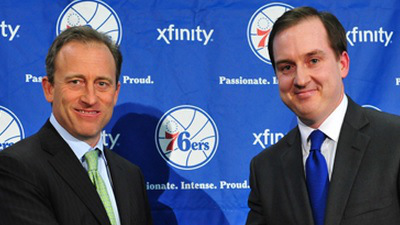
josh-harris-sam-hinkie

In 2013, the Philadelphia 76ers were in shambles. Their team was ill-constructed around a decent 3rd option in Jrue Holiday being utilized as a #1 option, and a failed 2nd overall pick in Evan Turner being utilized as the #2 option. They were a team annually destined to fight for the honor of an 8th playoff seed. To make matters worse, a host of poor and/or unfortunate decisions – among them an Andrew Bynum mega-trade and a draft day trade for the bust formerly known as Arnett Moultrie – whittled away their future assets.

Facing a depressing future, ownership ushered in Sam Hinkie, an 8 year Houston Rockets’ front office veteran. He was named General Manager, bringing a cutting edge analytics approach and a new-school way of thinking.

The team’s direction was forever changed.

***

What do you do when you have a losing hand? What happens when you realize that your current ceiling is a lot lower than you’d like it to be?

The answer depends on your worldview. Are you content fighting for 8th seeds? Or is a championship all that matters?

In the Philadelphia 76ers’ (and Houston Astros’) case, they emphatically chose the latter.

First you choose, then you pursue.

***

The pursuit began with a new interpretation of “basketball”.

Typically there is pressure to win now. Winning drives fan interest, increases ticket and merchandise sales, and boosts immediate revenue. General managers and coaches are given short shelf-lives that depend on their season-to-season success. Have a few losing seasons in a row and the axe falls quickly.

The issue with winning now is that it often biases decision making. Instead of going for the gold and increasing the chance of championship(s), it leads to good but not great. It leads to avoiding risks and sticking to safer options.

Philadelphia 76ers ownership allowed Sam Hinkie to think differently. With their blessing, instead of a micro season view, he adopted a macro multi-season view. Cut the cord to winning now, take risks, and pursue championship(s) in the future.

That begs the question – what produces championship(s) on the basketball court?

***

The NBA is a superstar driven league. 34 of last 35 title teams were led by superstars – top 5 players in the league – with names like Magic, Bird, Jordan, Shaq, Duncan, Kobe, LeBron, and now Curry. More often than not these Batmans also had Robins (co-superstars) in Worthy, McHale, Pippen, Kobe (on the Shaq squads), Parker/Ginobli, Gasol, Wade, and Thompson/Green.

Yes, for those who pulled for the Atlanta Hawks and “team basketball” in 2015, it would be both fun and exciting to see a superstar-less underdog win. While idealistic, it’s simply not realistic based on history. The size of a starting lineup (only 5 players) and the time a superstar spends on the court makes his impact monstrous. Throughout history you’ll find the occasional exception (2004 Detroit Pistons), but the rule remains the superstar.

***

Sam Hinkie’s magic word is optionality.

“I believe in optionality – a lot,” he said. “I believe a lot in flexible.”

Rumor has it that when Sam Hinkie applied to the General Manager position, he prepared an impressive presentation. It revolved around a now infamous trade, when in 2013 the Houston Rockets leveraged a package of assets – draft picks and players – to acquire James Harden.

The web Daryl Morey (Houston’s General Manager at the time) and Hinkie wove to acquire Harden is intricate. On the surface it looks simple: Kevin Martin, Jeremy Lamb, 2 first round picks, and a second round pick exchanged for a certifiable superstar. Dig deeper, and you find a collection of many smaller transactions – draft pick acquisition and exchange, salary cap manipulation, young talent, and a veteran player acquired on a reasonable deal – executed over years.

Optionality: The value of additional optional investment opportunities available only after having made an initial investment.

Hinkie’s optionality-based approach revolves around making many initial investments. He acquires and grows assets, consistently trades them up, and compiles a warchest of draft picks, young players, attractive contracts, and cap space. Any move that is an upgrade – even acquiring 2nd round picks that others often dismiss as “meaningless” – matters. All asset upgrades put the team in a better position to acquire a superstar(s) and/or useful pieces.

***

Optionality allows you to capitalize on the future – however it presents itself.

Monday morning quarterbacks everywhere look back and say “the Houston Rockets got lucky that Harden was available” or “the Oklahoma City Thunder were dumb for trading James Harden”. The point they miss is that the Houston Rockets were ready for anything. They were ready for any superstar to come available. It didn’t have to be James Harden.

They put themselves in a position to be lucky and to have the most attractive collection of assets when opportunity knocked. Sam Hinkie’s Philadelphia 76ers are doing the same. At a moment’s notice, they may become lucky too.

The landscape of the NBA is constantly changing, team needs are constantly changing, and the perspective of most teams is rooted in the short-term.

This offers long-term thinkers an edge.

***

These are various strategies employed by Sam Hinkie. While certain details are specific to the basketball court, their logic and implications extend far beyond it.

Strategy #1: Sell what isn’t working for maximum return.

Global Takeaways:
Be honest with your present situation. If it is destined for a level of mediocrity that you are not ok with, pivot and pivot hard. If your ladder is on the wrong wall, change walls.

Philadelphia 76ers:
Building through the draft (and/or executing mega-trades) requires picks, which are allocated based on season-to-season success. The 76ers tore their team down to essentially nothing, thus assuring several losing seasons and several prime picks.

Jrue Holiday. Evan Turner. Thaddeus Young. Spencer Hawes. Gone. In their place – you guessed it – draft picks.

Strategy #2: Accept risk in pursuit of high upside.

Global Takeaways:
The public overreacts to risk, thus opening doors. Property values during a real estate downturn. Business assets during a crash. If you remain sane and accurate in your valuations, you have an edge.

Philadelphia 76ers:
Hinkie targets superstar talent that is discounted due to injury. That level of talent is rare enough that the chance of re-injury is an acceptable downside.

In both the 2013 and 2014 drafts, the 76ers drafted two players – Nerlens Noel and Joel Embiid – who were widely considered the #1 players in their classes prior to being injured. Both fell into their laps. In 2013, the 76ers traded for pick #6 to snatch Noel, while in 2014, they used their own #3 pick to claim Embiid.

Noel has stayed healthy and developed into a defensive game changer (he looks like a potential Robin to a future Batman), while Embiid recently experienced a significant injury setback. The risk, however, was worth it.

Strategy #3: Exchange your assets for better assets, even if better isn’t a guarantee.

Global Takeaways:
When you make a bet, there is rarely a 100% chance of success (arbitrage is the exception). In fact, your odds of success in a winning trade or bet may be as low as 51%. Sports gambling titans check in with a success rate around 57%. 60% makes you an all-time legend.

If you push all-in on pocket rockets – AA – in no-limit Texas Hold’em, you are at least a 77% favorite over any other heads up hand. Does that mean if 56 hits a straight and beats your AA that it was a bad bet? If you buy an undervalued house and smartly renovate it but run into a shocking real estate downturn immediately thereafter, does that mean it was a bad decision?

Absolutely not. You do your due diligence and take a calculated risk (the part you control) and then hope for the best outcome (the part you don’t control).

Philadelphia 76ers:
Sam Hinkie recognized that his 2014 point guard – Michael Carter-Williams – was flawed (he has an abominable shooting stroke) and not suited for his championship aspirations. So he traded him for a sweet Los Angeles Lakers pick that was top-5 protected in 2015 and top-3 protected thereafter. Unfortunately the Lakers received the 2nd pick in the 2015 NBA draft (thus assuring that the 76ers didn’t receive it this year) and their record in 2016 is so far undetermined. If they have a good year and the 76ers receive a lower pick, does that make it a bad trade?

Absolutely not. My guess is that Sam Hinkie knew down to the percentages the chances to receive the pick in 2015, as well an accurate projection on the Lakers in 2016 and beyond. He also knew that most teams valued the pick more than MCW himself, opening doors to future trades. He held the pocket rockets, weighed the odds, and pushed all-in.

Sub-Strategy: No regrets.

Strategies #2 and #3 are closely tied together and revolve around smart risk-taking. If risk rears its head and the downside transpires, have no regrets. You acted intelligently, and regrets are wasted energy. Sink your energy into future opportunities, and do not allow yourself to become gun shy. Pocket rockets win in the long run.

Strategy #4: Find ways to use existing assets and competitive advantages creatively.

Global Takeaways:
Get creative with what you have in your possession – your unique combination of skills, opportunities, and material assets. People everywhere are AirBnB’ing their homes while they’re away, making low risk loans with stagnant capital, and renting vacant lots to seasonal beer gardens. Heck, one of my favorite stories is my grandfather finding a vacant lot (not his) and charging people to park in it!

Philadelphia 76ers:
The NBA has a salary cap, an amount each team must spend annually to ensure competitive balance. The 76ers didn’t see value in using their salary cap space for the very veterans making them mediocre. Instead, they used theirs to take on other team’s unwanted contracts while adding draft picks as the price for doing so. This goes back to understanding the short term motivations of others. Team X has no salary cap space, Team X sees a player they want to sign, Team X presents the 76ers a prime draft pick for helping them clear the space they need (see Strategy #8 for a specific example).

Strategy #5: Acquire devalued assets.

Global Takeaways:
Do you see an opportunity in something that others see as worthless? Keeping pristine baseball cards that other kids stuck in bike spokes nets a million dollar collection. Or how about an art-aficionado client of mine seeing a piece on the wall of a store she frequented, purchasing it, and flipping it for 16x its cost?

Philadelphia 76ers:
To such an extent that they are now the butt of many jokes, the 76ers sought as many 2nd round draft picks as possible. They relentlessly asked and received these picks as throw-ins to trades, noting that other teams typically tossed them around like candy. If every year 2-to-4 2nd round draft picks become useful players, then holding 5 of 32 possible picks (in 2015, for example) drastically increases your odds of finding one of them. 2nd round picks also allow you to pursue strategy #6.

Strategy #6: Emulate the successful models of dynasties.

Global Takeaways:
If you look hard enough, you find role models in any walk of life. Seek applicable tactics that contributed to their successes and apply them to your own journey. Do this via personal contacts – I have several friends and clients who are invaluable mentors – or via impersonal content circulating web/audio/print media – Gary Vaynerchuk on social media branding, for example.

Philadelphia 76ers:
The 76ers saw the San Antonio Spurs as a model of lasting success (5 championships in 15 years). A strategy the Spurs employ is stashing players overseas. While NBA teams are allowed an active roster of 15 players, they are permitted to sign and hold the rights to foreign players in various European and Asian leagues. This essentially gives them a larger roster, and if a player(s) shows considerable talent, the team clears a roster spot and imports him. The Spurs not only acquired a Robin this way – Manu Ginobli – but they also imported supporting championship pieces like Tiago Splitter and Patty Mills.

In his 3 drafts with the team, Sam Hinkie has stashed at least 2 players overseas each year, with none higher profile than last year’s 12th overall pick, Dario Saric. At a maximum these players are more chances at the elusive superstar and at a minimum supporting team pieces to import when ready.

Strategy #7: Do not take action just for the sake of taking action.

Global Takeaways:
I used to play a lot of no-limit Texas Hold’em poker (hence the poker analogies). Each and every time I sat down, it was easy to pinpoint the player who could not sit still, the guy who simply had to be involved no matter what. If he was being dealt a string of good cards, he amassed chips and looked like a genius. In many more instances, he went broke.

What’s the right move? Sometimes no move is the answer. If there is no edge to be had, sit tight. Patience can be a massive virtue.

Philadelphia 76ers:
Leading up to the 2015 draft, Sam Hinkie developed a reputation as a mover and shaker. Philadelphia fans anxiously awaited a night of big trades. When the team’s draft transpired with no notable moves, many were disappointed.

By all accounts other teams with high draft picks protected them like gold bars this year. In fact, there is a story that Boston Celtic’s GM Danny Ainge offered seven – 7! – draft picks to move to a higher slot and was rebuffed. Sam Hinkie found nothing worth doing, and so he did nothing.

Strategy #8: When the time is right, take massive action.

Global Takeaways:
First you do your homework and when you see an opportunity, you act. Trust the philosophy and system that you have in place. If you second guess yourself, you sabotage the work you’ve done.

Philadelphia 76ers:
Shortly after the 2015 draft, opportunity hit. The Sacramento Kings needed something – salary cap room (remember Strategy #4?)  The Philadelphia 76ers had it. Sam Hinkie struck hard and fast, and in a borderline criminal return haul acquired 2014’s #8 player, a 1st round draft pick, and future draft pick swap options.

In the 2014 draft, Sam Hinkie held the 10th pick. He knew the Orlando Magic, at the 12th spot, desperately wanted Elfrid Payton. Hinkie had no need for a point guard, and instead wanted Dario Saric. He trusted his information, saw an opportunity, and took Payton anyway. Holding the leverage and the player the Magic wanted, he squeezed them for a future 1st round and 2nd round pick, along with the 12th slot. Who did he get at #12? Dario Saric, of course.

Strategy #9: Stay ahead of the curve. Seek cutting edge, outside of the box opportunities.

Global Takeaways:
Get creative. Look for fresh connections between ideas and fields. Make calculated bets on concepts with significant upsides. Seek new technologies that further your existing business interests.

Philadelphia 76ers:
The team leaves no stone unturned.  They employ the best analytics. They experiment with game pace, shot selection, and team construction. They embrace sports science in prioritizing sleep, nutrition, and training methodologies. They are constructing a state-of-the-art practice facility. And if a new opportunity presents itself, you had best believe they’ll explore it too.

***
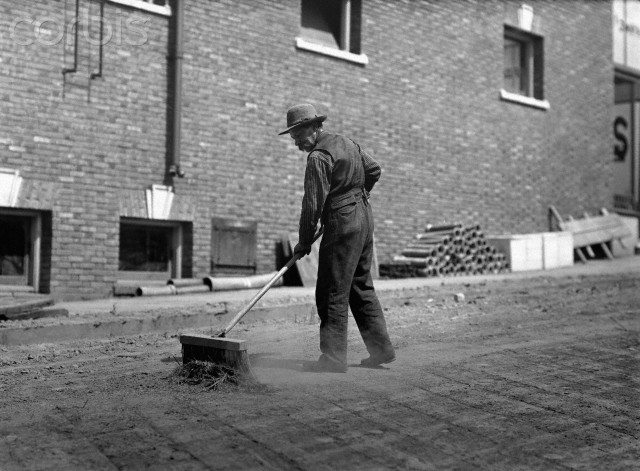
Credit: http://www.corbisimages.com

Credit: http://corbisimages.com

Never tank on the court.

This is less of a revolutionary strategy and more of a social commentary.

“If a man is called to be a street sweeper, he should sweep streets even as a Michaelangelo painted, or Beethoven composed music or Shakespeare wrote poetry. He should sweep streets so well that all the hosts of heaven and earth will pause to say, ‘Here lived a great street sweeper who did his job well.”

– Martin Luther King, Jr.

The 76ers get a lot of criticism for tanking, but anyone who watches the team knows that they never tank on the court. From the coaching staff to the players, they’ve developed a culture of working their asses off. Once more talent hits the court, this will pay dividends.

No stage is too small, and the mindset of expending maximum effort no matter what is the sign of a winner. Steve Liberati (listen to our podcast discussion here), who owns Steve’s PaleoGoods, once went to work for his Dad’s pest control company. Coming from the corporate world, he expected to be handed the keys. Instead he ran routes on the streets of Camden, NJ. Did he bemoan his fate? Nope. He dug in, ran those routes, and cultivated relationships that led to his non-profit – Steve’s Club. Interact with Steve today, and he is humble, hard working, and leading an exceptional company.

Consistent effort is underrated.

***

There is a lot to be gained from long-term perspective.

It’s not natural. We’re wired to be short-term thinkers. We’re wired to look for and shy away from the risks in our immediate environments. When you overcome your wiring, go macro, and think long, you capitalize on a huge opportunity.

Relentless Actions:

  1. What’s your game, what is your definition of a championship, and are you playing the game to win it? There is nothing more frustrating than striving for the top of a mountain when your ladder doesn’t reach the summit. Does your strategy need subtle tweaks or do you need to pull a Sam Hinkie and hit the restart button?
  2. What is your collection of assets? Where are your competitive advantages?
  3. What is everyone else doing, and what can you do differently (and productively)? Can you leverage a long-term outlook? Are others missing the forest for the trees?
  4. Can you employ any of the 9 strategies listed above? What are other strategies not listed?
  5. Do your homework, develop your philosophy, and be prepared to strike quickly and ruthlessly when the time is right.
  6. Stay humble and pour your effort and energy into every rung of the ladder, no matter how low or how high. If your ladder is on the right wall, every single rung contributes to a better future.

For the Philadelphia 76ers, the only question is time. The foundation is strong – several top flight talents, a growing overseas base, as many as four 1st round draft picks next year, and more. But in the ruthless, short-term sports world with heaps of fan pressure mounting, will ownership stand strong enough for long enough to bear the fruits of Sam Hinkie’s labor?

Fortunately you have a longer timeline. Overnight successes are rarely overnight and are instead a collection of positive decisions and efforts made over years. When you consistently act on behalf of your brand – whatever that means for you – with the long-term in mind, you win. Trust the process.

Short Format

Input, Output, and Improvement

I spent my weekend watching two sporting events.

On Saturday night, I watched the loud, brash, walk-right-through-you Conor McGregor knock out Chad Mendes at UFC 189 after struggling through early challenges.

On Sunday morning, I watched the cool, calm, classy Roger Federer display grace in defeat to Novak Djokovic in some of the best tennis you’ll ever watch.

Two athletes displayed the consummation of years and years of behind-the-scenes blood, sweat, and tears on the biggest of stages. Both shined in their own ways.

In both instances, I came away inspired. I came away wanting to work harder and be better. That is what sports do for me.

But sports are not the point of this post. The point is input=output, the simple equation at the root of everything. 

What you choose to usher into your eyeballs and earholes and all of your sensory channels is a cause, and every cause has an effect. 

The cause/effect combination is unique to you, and there are a host of useful effects depending on the circumstance – ignition, inspiration, improved perspective, empathy, meditation, relaxation.

Are you consciously choosing your causes? Are you consciously aware of their effects?

If you want to improve your mind, body, and business, start there.

As I’m typing this, I turn my head to the right and see Arnold Schwarzenegger on the wall. He’s telling me to get to work, and so that’s exactly what I’ll do.

Relentless Podcast

Steve Liberati: Build Something Remarkable, Remain Curious, and Water Down Your Wine

It’s time for episode two and the first long-format discussion on the Relentless: Real People, Real Results, Real World podcast!

Podcast Description:

A deep dive into how real people get real results in the real world. Relentless mixes stories to provide context and the actions you can take right now in both short-format episodes and long-format interviews. Get ready to tackle anything from your morning cup of coffee to your exercise and nutrition regimens to building a million dollar business.

Steve Liberati: Build Something Remarkable, Remain Curious, and Water Down Your Wine

In this episode I welcome in Steve Liberati, a true Crossfit OG, the founder of Steve’s Club, the creator of Steve’s PaleoGoods, and – he’d say most importantly – a husband and father.  Here’s the rundown:

  • Steve on Seth Godin: “He inspired me not only to build something but to build something remarkable.”
  • He fueled the discussion with Nespresso, although his morning began with French pressed La Colombe coffee.
  • Strategy for breaking out of a slump: “stand up, walk around, go outside, and take a deep breath.”
  • Inspiring book of the moment: Different by Youngme Moon.
  • On the corporate world: “It sounds real fancy. I had a suit and tie. I had a fancy business card. I thought I had everything I wanted.”
  • Soul searching and transitioning careers: “I have to love what I do. I have to have meaning.”
  • Learning on the pest control job as part of his Dad’s company: “It’s one thing to have all of the textbook concepts and marketing terms, but it’s a whole different thing running a business and wearing multiple hats.”
  • A recommendation to keep the daytime job and use it to pay the bills while you pursue other avenues.  “When you’re pressured to pay the bills it changes your focus.”
  • The organic evolution of ideas.
  • Forget “What are you passionate about?”  Ask “What are you curious about?”
  • Seeing the benefits of group training and starting Crossfit Tribe in the park with sandbags.
  • Inspiring youth via creating an environment in which to succeed.
  • Respecting the adversities and challenges of others and realizing it’s not me vs. the world.
  • On spreading himself too thin: “We all have ADD. We want to do so many different things. We want to have our hands in everything. And before you know it, it’s just not effective. I was doing a lot, but I wasn’t doing anything great.”
  • Big Steve to Young Steve: “Keep it real. You have to be realistic with  yourself and what your strengths are. Time management wasn’t one of my strengths.”
  • Ditching technology for a pen and post-it notes to stay on schedule.
  • Growing slow and find the sweet spot – best possible service balanced with good demand.  More is not necessarily better.
  • Advice to online sellers: “Do your research.” Sometimes an idea may not work even though it’s your passion. Map it out and do your homework. “Hope is not a strategy.”
  • Advice to retail sellers: “Make sure you are well funded.” Self-funding is very difficult when it comes to fast growth. Get capital beforehand, not during.
  • Living by strong principles and being proud to sell what you are offering.
  • Resisting pressures to cut costs and quality: “Once you take a cookie from the cookie jar you think you can take another cookie.”
  • Recognizing that managing people is not a strength and finding others to thrive in that role. “I do my best to lead from the front.”
  • Leaving his ego behind: “Even though my name is on it, it isn’t about Steve.”
  • Family is #1.
  • Balancing work and family and deciding to go home on time: “Is the smokehouse on fire? Can it be fixed tomorrow? Can I come back to this?”
  • Respecting “feeling good” as just as powerful an end goal as scale reduction.
  • There are no magic pills and cookie cutters. Everyone has to find their personalized sweet spot.
  • Having an end game of helping as many people as he can, eating good, feeling good, and being good.
  • Emulating Roman emperors and watering down his wine.

STEVE’S Relentless Action:  Counteract.  Balance is key, and it’s at the heart of everything we do.  If you’re going all out balls to the wall, take a step back, relax, read a book, take a walk.

A Gift: My favorite to-go snack is the Dark Chocolate Pineapple Paleo Bar.  Use the code “PaleoSteve” to get a one-time 10% off discount at Steve’s PaleoGoods.

A Favor: If you like what you hear on these first few episodes, please help me out by subscribing to, rating, and/or reviewing the podcast on iTunes.  Thanks for your support!

Speaking of iTunes, you can listen to the episode there, download it via this link, or listen on the player below:

Relentless Podcast

The Relentless Semester: Create Your Own Education

After a lengthy hiatus from the microphone, I’m busting back onto the podcast scene, and I’m excited about it!  It’s time to introduce Relentless: Real People, Real Results, Real World.

Podcast Description:

A deep dive into how real people get real results in the real world. Relentless mixes stories to provide context and the actions you can take right now in both short-format episodes and long-format interviews. Get ready to tackle anything from your morning cup of coffee to your exercise and nutrition regimens to building a million dollar business.

The Relentless Semester: Create Your Own Education

In the first episode I discuss the Relentless Semester, an alternative way to approach education at any stage of your life.  Here’s the rundown:

  • Exiting a life rut by first pulling back aggressively and identifying the contributing actions that are under your control.
  • Talking formal degrees and the opportunity to get equal or better expertise via your own initiative, drive, and creativity (at a fraction of the cost).  Udemy and Lynda are mentioned as examples.
  • Noting that a huge pro to formal degrees – and why they won’t die for a long, long time – is the structure they provide.
  • Proposing the Relentless Semester as a way to chart your course and impose your own structure.  Its criteria:
    • Realistic Aggression – challenging but not enough to be demoralizing.
    • Realistic Timeline – the right blend of short-term and long-term.
    • Accountability – partnering, seeking meetups, establishing reporting habits, etc. with the end goal of holding your ass to the fire.
    • Reliability – choosing course material that you trust.
    • Practicality – each course is tied to something that you can apply in the real world.  The more courses tie into your profession, the more you can take on.  And vice versa.
    • Balance – there is no excuse for selecting material that you hate.  The more boring a block of material, the more you must be 100% positive it will make you better/happier.
  • Encouraging you to include “gym class” or some sort of physical goal.  Advice for those goals: know why, record metrics, seek social accountability, require little in the way of equipment/materials, and avoid overly-stressful plans.
  • Offering my own summer semester as a case study:
    • Course #1:  Becoming a Supple Leopard by Dr. Kelly Starrett (book), Goal – become a better trainer by improving mobility.
    • Course #2: The Personal MBA by Josh Kaufman (book), Goal – refresh my business roots.
    • Course #3: Practical – Establish Relentless brand and podcast, Goal – become self-reliant and find lowest effort, highest impact ways of publishing and publicizing content.
    • Course #4: Practical – Quickbooks, Goal – better organize Relentless finance management.

Relentless Action: Whether or not you chart a full Relentless Semester, perform a self-assessment.  Is there something under your control that you can improve upon?  Can you apply one single course on the side to better yourself this summer?

A Favor: If you like what you hear on these first few episodes, please help me out by subscribing to, rating, and/or reviewing the podcast on iTunes.

Speaking of iTunes, you can listen to the episode there, download it via this link, or listen on the player below:

Short Format

Exercise is Overrated

Are we too tied to the concept of “exercise”?

It comes with a host of expectations.  Exercise _ times per week.  Exercise _ minutes per workout.  Exercise at _ intensity.  Exercise in _ format.

Ironically these criteria can create pressure, which in turn create excuses.  This is a crazy week, so I’ll pick it up next week.  I only had 20 minutes, so it wasn’t worth working out.  I didn’t feel up to it, so I bailed.  My trainer wasn’t available, so I’ll get after it next time.

Studies and data back up a useful point to internalize: the most important variable is that you do something – anything! – consistently.  Almost anything (safe) performed above your current baseline produces positive physical results.

The exception to this is the athlete/competitor tearing after aggressive goals.  Yes, this requires detailed, personal, and progressive programming.  But let’s be honest – how many of us fit that description?  Not many.  Most of us want healthy bodies that we can be proud of without requiring huge sacrifices on the personal and professional fronts.

Your takeaway is to forget “exercise”.  Take the pressure off, and strip away the expectations.  Try “movement” on for size.  It’s a comfier fit.

Now re-assess those excuses.  Any movement you fit in during the crazy week helps.  20 minutes is hugely beneficial.  When you don’t feel up to it, take a walk.  Any trainer worth his or her salt will provide an at-home/outdoor routine to keep you on track, so just ask!

Take an honest look at your lifestyle – your profession, your family, your recreation.  Instead of forcing in exercise, find opportunities to seamlessly integrate movement.

Have a walking conference call.  Go to yoga with your neighbors.  Play a game of Ultimate Frisbee.  Hike with the dog.  Engage your best friend in a push-up challenge.  Engage your family in a Fitbit challenge.  Choose to take the stairs.  Use the free workout videos on your cable package (did you know I have some of those?)  Hold a plank a day.  Do a pull-up every time you pass the bar in your house.  Do 10 squats from your computer chair every half-hour you’re seated.  Learn a Turkish Getup.  Lift, run, bike, swim, row.

Start simple.  Move.